Home · Learn · El Niño · Cities and community
Cooling spots: how a community can list shaded public places
In short. On very hot days, a cool place within walking distance can protect older people, children, outdoor workers and anyone without a fan or cooler at home.
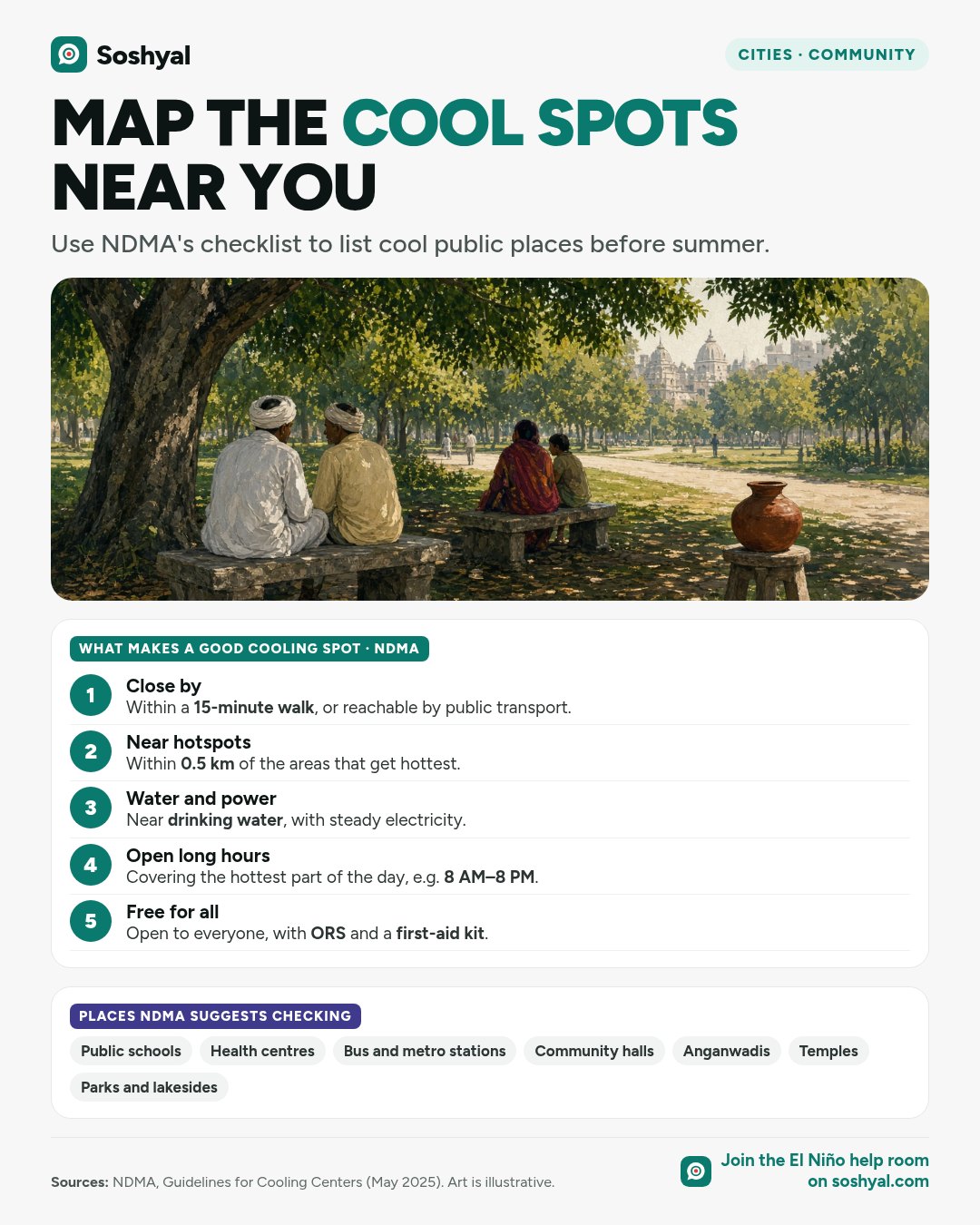
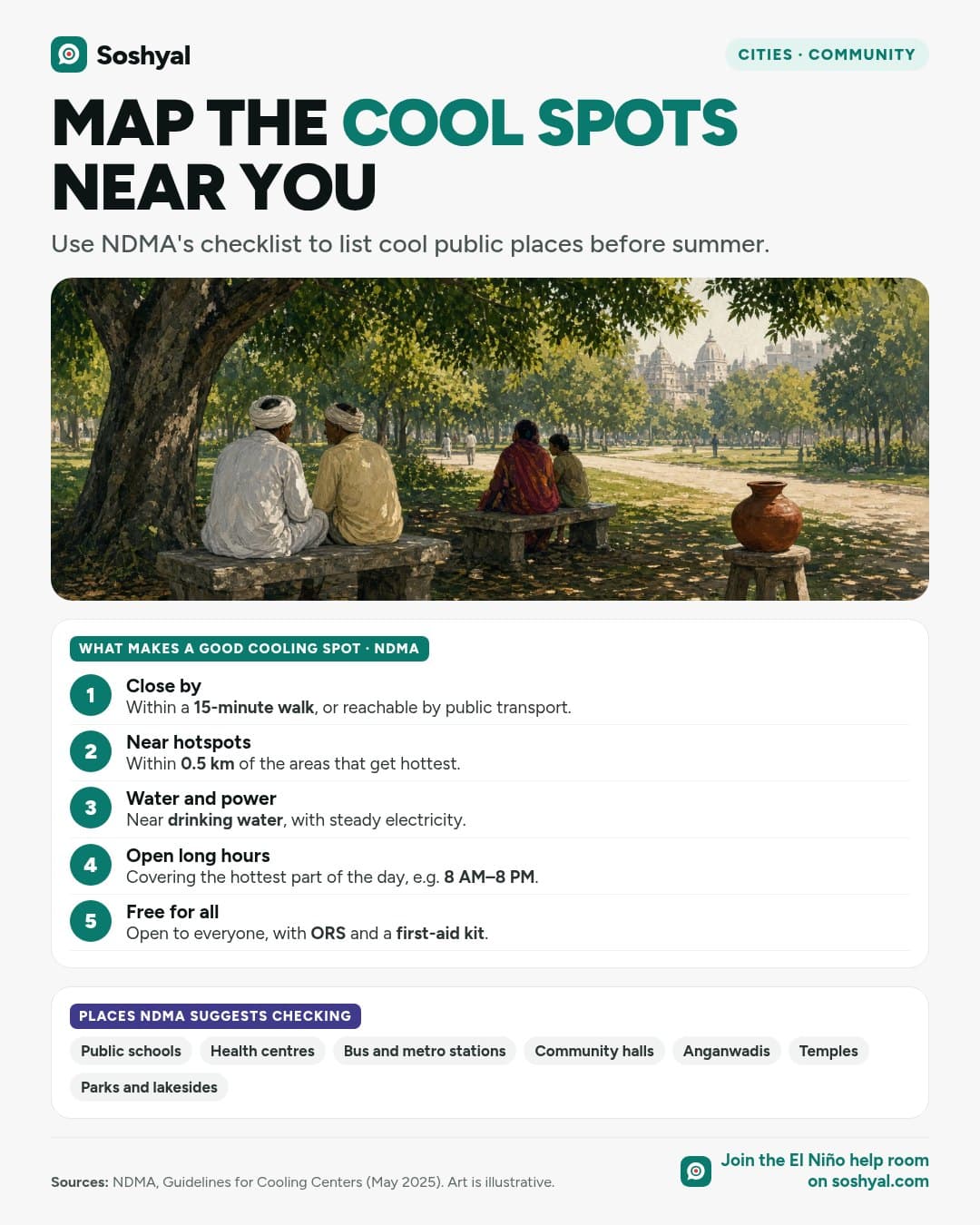
On very hot days, a cool place within walking distance can protect older people, children, outdoor workers and anyone without a fan or cooler at home. A neighbourhood can prepare a simple list before summer.
What the guidelines say. The National Disaster Management Authority's Guidelines for Cooling Centers (May 2025) describe cooling centres as cooled buildings, or spaces set up outdoors in or near parks, near water bodies, or on school and public-building premises. Existing government or community buildings are the easiest to use: public schools, primary health centres, bus terminals, railway and metro stations, community centres, anganwadis, temples and disaster shelters.
A good spot, per NDMA. It should be reachable by public transport or within a 15-minute walk, within 0.5 km of the hottest, most vulnerable areas, and near a health facility. It needs drinking water and steady electricity, long opening hours that cover the hottest part of the day (for example 8 AM to 8 PM), and supplies such as ORS and first-aid kits. It should be freely open to everyone. NDMA suggests planning about 20 litres of water per person per day, 4 litres of it for drinking.
How to start. Walk your area with neighbours, note shaded and cooled public places that meet these points, check opening times with whoever runs them, and share the list. Centres should be identified and ready before the heat season (April to June). Trained volunteers or community members can help run them.
Post your list in the Soshyal El Niño help room.
Join the El Niño help room on soshyal.com to ask questions and share what you see in your area.
What you can do
- Read the checked facts
- Share this with your family or building group
- Join the room to ask or offer help
Last checked 17 Oct 2026
Last checked: 17 October 2026. Forecasts can change; check the latest IMD, NOAA, WMO and BoM updates.
Sources
Pick your room
Heat Safety India
Heat warnings, cool spots and looking out for neighbours.
Always openJoinEl Niño 2026: Learn & Help
What El Niño means for India, and a place to ask or offer help.
Always openJoinHyderabad Water Watch
Water-saving tips, leak reports and neighbour help in Hyderabad.
Always openJoinFarmers & El Niño
Farmers sharing rain updates, rabi tips and help.
Always openJoinKids Learn: El Niño
Parents and teachers explaining El Niño to kids. Room is for adults 18+.
Always openJoin